
Showing posts with label Glockenspiel. Show all posts

Monday, March 22, 2010

AMHC Phase I: Pentatonic Color and Sound Therapy


I have been meaning to post about this wonderful program for a while now, yet every time I sat down to do it, I would get intimidated, wondering *how* I could properly do it the justice it deserves as it truly encompasses so very much - how can I wrap it up into a neat little blog post, but I'll do my best...

I have heard it said before that in a Waldorf school, "Music is the thread that weaves the academic day together." In the early years, the child is exposed to singing and music through the mother, caregiver, or teacher. In Grade 1, introduction to the pentatonic instruments usually begins - via the pentatonic flute.

In Grade 1, the student receives two languages in a Waldorf school, usually Spanish and German. One of the best ways to teach a second language to a child is through song. As homeschoolers, teaching music and foreign language can seem very intimidating at times.

The AMHC Program, created by Naturopath Dr. Aurore Henze does just that - teaching pentatonic music and foreign language, with the added element of color and sound therapy woven effortless into the lessons. We are so enjoying this program! It encompasses songs in Spanish, German, and French...


Dr. Aurore Henze spent years studying and mastering alternative therapies. As a musician herself, it was only natural that she founded the AMHC and created a healing and holistic music program which encompasses color and sound therapy, along with foreign language and music appreciation and development. She is a waldorf inspired homeschooler to three lovely children. There is much to this program, though to implement it, all you really need is a few basic materials - mainly the book, some stickers, and a pentatonic instrument (glockenspiel, flute, or lyre are the ones she recommends) - though a complete list of recommended supplies is included in the book. Most waldorf inspired homeschooling parents will have block crayons and watercolor paints, etc.

The program is easily laid out with each note of the pentatonic scale being assigned a therapeutic color based on the scientific research of color and sound by Dr. Darius Dinshah, author of "Let there be Light".


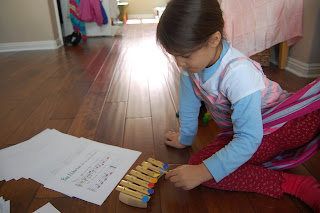
Marking each note on the pentatonic glockenspiel (ours is an Auris from Sweden), the child can easily follow along with the sheet music, which is also color coded. They say the notes and then the colors as they play along.


And then they can sing the lyrics once the song is mastered.


We had purchased these maths blocks and they work very nicely with the program as manipulatives that the child can place alongside the notes to reinforce the colors and songs they are playing, as recommended in the program.


They can also be used for math or for free play and building.


While neither of the girls is receiving piano lessons just yet, they love to tinker around on the piano and Charley is beginning to make up her own simple songs. I do feel that as we make the connection from the notes of the glockenspiel, to the piano, to the pentatonic flute - there is a comfort and a confidence that is newly emerging. This program does a wonderful job of not intimidating the child and allowing them the pleasure of being able to *read* the music to play a song which sounds fantastic thanks to the perfect pentatonic scale.


While we made our way through the pages in the Phase I book, I got out a pentatonic flute book I picked up at the Steiner College Bookstore which I absolutely love called, "Waldorf Teachers' Companion to the Pentatonic Flute" by John Miles.


Using Dr. Aurore's color therapy suggestions, I made crayon marks under the notes to help us learn to play these songs with the glockenspiel.


And then we learned the song on our Choroi Pentatonic Flute.

So I love that this program can overlap with other songbooks so that it grows *endlessly* with the child (keep in mind that there are two additional phases!). While I admit that I have not done much research on color therapy, I have heard some rave reviews about it from the holistic community. Seeing how well my daughters are taking to it and the success that Dr. Aurore has had with her own children (including her son who was not only healed from a diagnosis of autism, but was the youngest American musician to be invited to study at Interlochen in 2005) I feel very positive about the merits of this program.

If you are a Lifetime Member of Kristie Burns' Earthschooling program, you can access Phase I, including a video showing Dr. Aurore and her talented children as they showcase the program. I think that the program is going to be offered soon via amazon, as well. It can be purchased here and I'm sure Dr. Aurore would be happy to answer any questions about it!

I particularly loved one section where she compared Memorization to Comprehension in relation to Helen Keller and Anne Sullivan, her teacher, who insisted upon true comprehension. In music, there are many children (including myself as a youngster) who could read music and play the piano, but I did not really *understand* it, as I can not sit down and create it with that ultimate trust and surrender to the true comprehension that is music. I love that in early Waldorf education, the child learns by ear, by imitation as s/he hears and sees the teacher/parent leading. This program encourages this through humming as the notes are learned - matching pitch and can be taken further with harmonies. The confidence it will build through the years can not be underestimated as within creation of any kind, comes true happiness and satisfaction. I believe this program strives for true music comprehension. There is much more to be said, but then I will be writing a novel - lol! If you have been looking for a program to enhance your music and foreign language studies, this just might be what you're looking for!

You can read more about Dr. Aurore and Color Therapy at her website here. Dr. Aurore's blog can be found here. She has also written a book called, "Beyond Natural Cures" which can be found here.

Thursday, October 22, 2009

First Grade: Language Arts Block


I'm back to blogging after a long hiatus due to computer repair and a 3 week trip to Chicago to visit family...

We have been taking our time with our first block, which is Language Arts. I am pulling from a variety of sources, including Kristie Burns' Earthschooling, Eric Fairman's Path of Discovery, Zonneveld and Schrager, and of course, the Brothers Grimm.

Before you purchase a Grimms book, though, you might want to look at this website where you can access the stories for FREE.

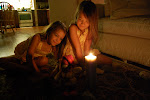
We usually begin our day by lighting a candle, playing our beginning song on our Auris glockenspiel, saying a verse and a prayer and then we begin.


I will go back and do a master list at the end of our Language Arts block, but for now, here is the order of our lessons. I will add the next four letters to the blog tomorrow.

We are only working on capital letters, consonants before vowels. We also decided to follow the order that Fairman suggested, with easiest letters first.

Here's a wonderful blurb about teaching Waldorf reading from Kristie Burns' earthschooling blog, which I found so poignant.

M - "Simeli Mountain" by the Bros. Grimm


We love Kristie Burns' "Sixth Sense Language" ebook and I usually begin by reading her verse and have the girls guess which letter we are doing. I then reveal my chalkboard drawing and share the story with them. They work on their whiteboards sometimes and we then look at the pictures from our two alphabet books "LMNOP" & "Living Alphabet". We talk about which words begin with that letter and I often write them down on a whiteboard.

Following "Sixth Sense Language", we also tie in the other senses to the letter and end with the three of us drawing in our MLB's together. Sometimes they copy mine. Other times they are inspired to draw something unique.

For the letter "M", we bought some marigolds to plant and enjoyed the fragrant smells.


Elena decided she wanted to form the letter "M" with some clay and even continued to make the scene from the story.

Charley finished her whiteboard drawing inspired by Simeli Mountain.


Drawing in our Main Lesson Books.

The finished products :D


Words that start with the letter "M"...


V - "Valley of the Violets" by me


For the letter "V", I just couldn't find a Grimm's story that I was happy with, so I decided to make up my own story, using inspiration from the Syrendell sprites and Mamma 4 Earth's "Norman the Storytelling Gnome".

I used a felted playscape I made, the three Syrendell sprites and a basic gnome my sister made for us to represent Norman. I set up wooden blocks in the shape of a "V" as the valley and draped it with silks hand-dyed by Syrendell.

The story was about Violet Sprite who had been captured by a mean giant who imprisoned her underground at the foot of a valley. Above her sprouted a large field of violets. Her sisters would watch her image in the mystical pond and long for her return. One day, Norman the Gnome heard their tears and came over to offer his help. He climbed the peach tree and found the golden peach and then traveled upstream to the Valley of the Violets, where he planted the golden peach. The ground magically opened and Violet was set free. The angry giant was so greedy that he leaped in after the golden peach and the earth promptly swallowed him whole. Thus, he forever remains. Norman brought Violet back to her sisters and they lived happily the rest of their days.

The girls worked on their MLB's...
And we ate some yummy vegetables for lunch!


S - "The White Snake" by the Bros. Grimm

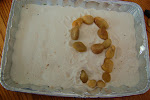
We used wooden shapes and "dragon's tears" to make the shapes of the letters...
And had fun thinking of words that begin with the letter "s".

Worked in our MLB's...


And the girls had sushi for lunch!


T - "The Three Little Men in the Wood" by Bros. Grimm

Had tea during lunch and smelled some spices beginning with the letter "T", including thyme leaves & turmeric.

To be continued...

Thursday, August 27, 2009

Second Week of Grade 1: Form Drawing

This week's Form Drawing lesson was on Standing Forms. Taking from Donna Simmons book, "Form Drawing for Beginners", we focused on six forms: square, triangle, circle, star, rectangle, and 4 leaf clover. I also ended up adding a very complicated form to fit the story I chose for this week's lesson and that is the crescent.

The story I chose was: "The Star Children" which is commonly told in Waldorf schools. It's a beautiful tale about Father Sun & Mother Moon and their star children who light the sky. One night, the star children are playing, not heeding their mother's calls. They hide behind a cloud and a gust of wind blows them to the ground and they are not allowed to return. Mother Moon sings, "Twinkle, twinkle, little star...how I wonder where you are..." and Father Sun finds a way to have the stars ride up on the wings of the dandelion fluff to visit them again. It's very sweet and was the perfect story for the shapes we were drawing. Can you spot all 7 shapes in my chalk drawing?

We also are overjoyed at the arrival of our Auris glockenspiel, which is heavenly (another post on that next week). Our day now begins with a scale up and down the glockenspiel, followed by an upward sweep of the notes signifying our special time is about to begin. The girls come to the table and we light our candle, say a prayer, our verse and begin the day's activities.


I told the story to the girls and introduced the shapes as the tale progressed. We then broke the shapes down to three days.

Day 1: triangles and 4 leaf clovers
Day 2: circles, rectangles, and squares
Day 3: stars and crescents (saving the hardest forms for last)
Each day, we would walk the forms outside using our sidewalk chalks, and practice before taking up our MLB's and trying our hand at them. The girls love to shade borders around their MLB work and are getting good practice with the block crayons.

The girls love drawing on the white board and it's a great way to practice the forms without wasting paper.

Here they are walking two of the shapes outside, giggling all the while as they try not to run into each other on the star shape :)

Charley was very proud of her stars. I noticed they were frustrated the first time they tried to draw them, but after one day of practice, they got it! The crescents were very difficult, though.


Then today, Day 4 (we took Monday off due to a doctor's appt), they drew the story in their MLB's. They were quite frustrated with the crayons as I was encouraging them not to draw an outline and fill it in, but use the block crayons to shade around their objects. Elena got it!


When we are finished with our work for the day, I go up and down the scale on the glockenspiel in our pattern, and then sweep down the notes signifying the close of the day. The candle is extinguished and we go about the rest of our day.

We will now continue to do form drawing once a week, using these forms we've learned the past two weeks.

The resources I found most helpful for form drawing have been:
~Donna Simmons "Form Drawing for Beginners"
~Eric Fairman's "Path of Discovery Volume One: Grade One"
~Supplies: MLB's, block crayons, stick crayons, chalkboard with chalks and eraser (and/or a whiteboard with markers and eraser), sidewalk chalk, sandscape with sand and a stick, a jump rope or string; and your stories. Another idea to use in the future would be to make dough, shape it into the forms, bake it and eat it (yumm!)

I also just saw that Kristie Burns from Earthschooling is coming out with a form drawing section and I'm really excited to see it! I love her materials and will be using many of them in our schooling (posts on that soon)!

Having girls who like lots of colors, I allowed the girls the freedom to use whatever colors they wanted and to do the forms large or small with as many or as little of them on a page. I did emphasize quality over quantity, but do want to allow them to make the MLB their own. I do not want to create "school at home" so allowing them these freedoms will hopefully protect their individuality and creativity. I also ask them to draw the forms with both the block crayons and the sticks to get used to the difference. I have read conflicting information on which is better to use so we are learning to use both. They definitely feel the sticks are much easier to control.

Next week we will cover our first Language Arts blog! Can't wait! Thanks for reading about our second week of form drawing :)